History & Restoration of The McCleary Hotel
A Working Showcase of Craftsmanship (1912)
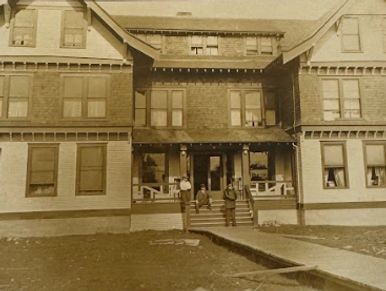
The McCleary Hotel was built in 1912 by Henry McCleary, founder of the town of McCleary, Washington. Conceived during the height of the Pacific Northwest timber boom, the hotel was never intended to be a monument of luxury for its own sake. Instead, it served a far more strategic purpose.
Henry McCleary built the hotel as a living showroom for the products of his mill.
Every beam, stud, door, hip wall, and piece of finished trim inside the building demonstrated the quality and variety of lumber his mill produced. Guests—many of them traveling buyers and business partners—experienced McCleary’s materials firsthand simply by staying in the hotel.
Mr. McCleary’s profits were not in hospitality. They were in lumber.
The hotel helped sell it.
A State-of-the-Art Hotel for Its Time
When it opened, The McCleary Hotel was considered technologically advanced for a small mill town.
- The building was heated by steam, piped directly from the mill across the street through a 6-inch iron pipe, then distributed throughout the hotel via 1.5-inch pipes to room registers—some of which are still visible today.
- Guests arrived by passenger train, which stopped directly in front of the hotel at the end of the rail line.
- Wooden plank boardwalks led visitors from the platform to the hotel’s front doors.
- Inside, the building was fully electrified—no oil lamps—an uncommon feature at the time.
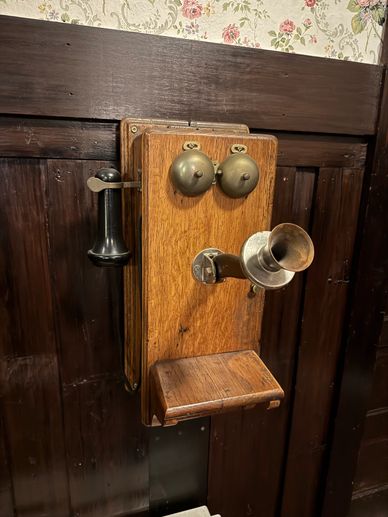
- A modern telephone and buzzer system at the front desk allowed staff to ring guests in their rooms when calls arrived.
Guests were escorted upstairs by a concierge through electrically lit hallways to their rooms, reinforcing the hotel’s modernity and efficiency.
The Original Floor Plan and Guest Experience
Upon entering the hotel, guests found themselves in the Fireside Room, with clear sightlines into the Grand Dining Hall to the right.
To the left:
- The Ladies’ Music Room sat toward the front of the building.
- The Billiards Room occupied the rear.
The kitchens were straight ahead but concealed behind the fireplace wall—out of sight, yet central to the operation.
Guests dined formally in the Grand Dining Hall, played billiards, and enjoyed spirits during Prohibition—an era when Henry McCleary was famously involved in sponsoring alcohol production.
All the while, visitors placed lumber orders, subconsciously cataloging the building’s craftsmanship as part of their purchasing decisions.
From Hotel to Apartments (1940s)
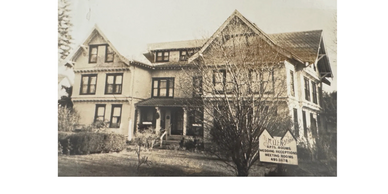
In the 1940s, the hotel was sold and converted into apartments. While the second and third floors were only modestly altered—mostly by adding doors to combine rooms—the first floor was radically transformed.
The building’s original form is a double-gabled structure with:
- A south wing
- A north wing
- A connecting central hall
During the apartment conversion:
- The south wing (Dining Hall, McCleary’s office, and part of the kitchen) became two apartments.
- The north wing (Ladies’ Music Room and Billiards Room) also became two apartments.
- The central section (Fireside Room and remaining kitchens) became the manager’s apartment.
Major changes included:
- Drop ceilings lowering heights from 10 feet to 8 feet
- Relocation and straightening of the main stairway
- Moving the front door
- Installing partition walls
- Enclosing porches to create interior rooms
These changes fundamentally altered the original circulation and openness of the first floor.
Restoration Begins: The Challstedt Era (1985)
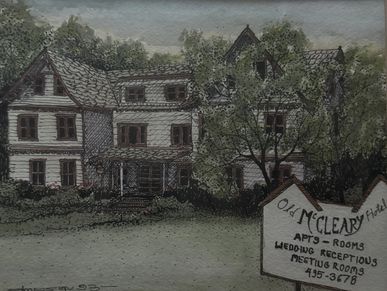
In 1985, Penny and Evert Challstedt purchased the property and began the slow, difficult work of restoration.
Their accomplishments were significant:
- The Grand Dining Hall was fully restored
- The Fireside Room and Ladies’ Music Room were mostly restored
- The building returned to use as a hotel and event space
Some compromises and unfinished areas remain from this era:
- The Fireside Room’s original front door was never restored
- Apartment-era window remains (front door)
- The wall separating the stairs from the Fireside Room remains as a required fire break
- A brick façade covers the original concrete fireplace
- The north wall of the Ladies’ Music Room is shifted three feet south of its original location
- The Billiards Room was never restored and remains part of an apartment
- The kitchens were only partially recombined, with Penny’s kitchen becoming locally beloved for event dinners
By the time the Challstedts reached their 70s, the mortgage was long paid off. When COVID arrived in 2020, dinners ceased, rentals slowed, and the building entered a quiet holding pattern.
A New Chapter Begins (2025)
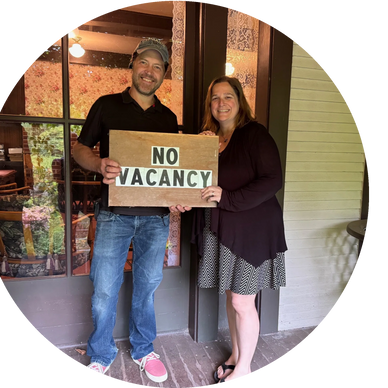
We purchased The McCleary Hotel in June of 2025.
The common areas—the Dining Hall, Fireside Room, and Ladies’ Music Room—were in good condition, along with several guest rooms. Our original plan was to open select areas and complete major exterior work the following summer.
Insurance companies had other plans.
Before opening, we were required to:
- Install a new roof
- Repaint the entire exterior
- Replace the electrical system, which dated to the 1940s and used hazardous Zinsco and Pushmatic panels
Though unplanned, these updates were necessary. After completing the work, we opened on November 8, 2025—three months later than intended.
Our Restoration Philosophy
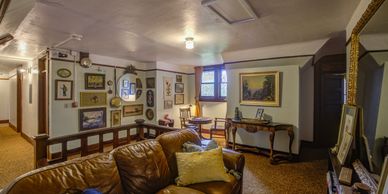
Our approach to restoration is guided by two core inspirations:
- Historical accuracy
The building is best understood as Swiss Craftsman, not Victorian. We’ve worked to realign décor, materials, and color palettes with the building’s true era and intent. - Layered storytelling
We are inspired by venues like McMenamins, where history is not frozen in time but playfully layered—slightly surreal, immersive, and alive.
The goal is not perfection.
The goal is character, continuity, and warmth.
The Hotel Today—and What’s Next
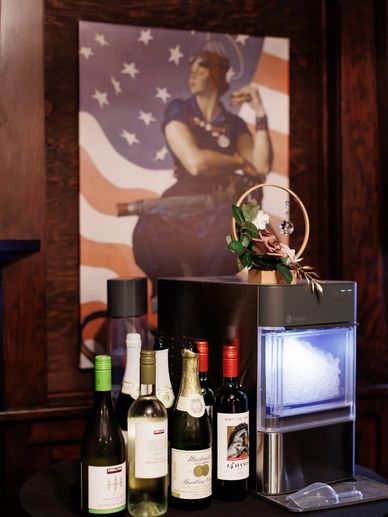
Since reopening, The McCleary Hotel has hosted:
- Private parties
- A vow renewal
- Community game nights
- Overnight guests
- The final stop of McCleary’s Christmas celebration
Most guest rooms are now operational. In the months ahead, we are preparing to open:
- Cascara Studio and Micro-gym, yoga and movement studios
- Rosie's Place, a restaurant in the Cedar Gathering Hall
- An ADA-accessible guest unit
- Cascara Spa outdoor amenities including hot tub, sauna, shower, and cold plunge
- A wood patio extending from the Cedar Gathering Hall
The McCleary Hotel has always been a working building—shaped by industry, hospitality, and community.
We are honored to carry that legacy forward.